Station 05.2 · Marine Mammals

The bay's year-round residents, and its most curious ones.

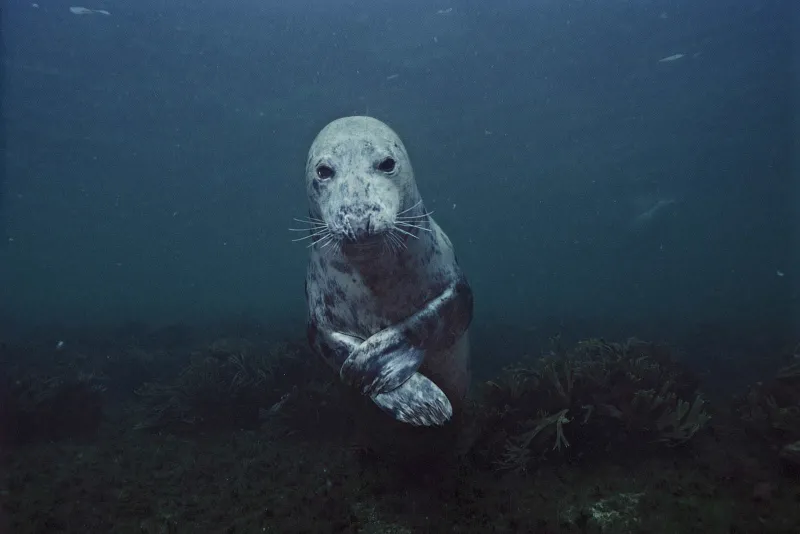
Unlike the whales, seals never leave. Harbour and grey seals haul out on ledges, sandbars, and small islands all around Fundy, following the tide in to feed and back out to rest — often watching ferry passengers as intently as the passengers watch them.

Harbour & Grey Seals · Field record

Season

Year-round

Harbour seal

1.5–1.9 m

Round head, dog-like face

Grey seal

up to 3 m

Long horse-like snout

Dive depth

to ~300 m

Grey seals can make deep dives while hunting

01

Two seals, two profiles

The quickest field mark is the head. Harbour seals have a short, rounded face — the classic puppy look — with V-shaped nostrils. Grey seals have a much longer, straighter muzzle, which has earned them the nickname “horseheads.”

Grey seals are much bigger. Large males can weigh around 300 kilograms or more; harbour seals are smaller and more compact, with adults generally weighing well under 130 kilograms.
02

Built for cold water

Fundy water stays cold even in summer. Seals cope with it using a thick layer of blubber and a specialised circulatory system that helps conserve body heat, transferring warmth from outgoing arterial blood to cooler returning veins.

When they dive, their heart rate slows and blood flow is prioritised for vital organs such as the brain and heart. Harbour seals can remain underwater for around 20 minutes on a single breath.

03

The haul-out rhythm

Seals need dry land to rest, moult, and care for their young, so their movements are closely tied to the tide. As the water falls, rocks, ledges, and sandbars become exposed and seals haul themselves out. When the tide returns, they disappear back into the water.

Around Deer Island, Campobello, Grand Manan, and along the Digby Neck, exposed shoreline and haul-out sites can provide good opportunities to spot them.

Fun facts

01

Did you know

A seal's whiskers are extraordinarily sensitive. They can detect the tiny water movements left behind by swimming prey, helping seals track fish even when visibility is poor.

02

Did you know

Harbour seal pups can swim very soon after birth, an important adaptation for life in tidal coastal waters.

03

Did you know

Grey seal pups are born with a distinctive white coat called lanugo. They shed this soft baby fur after their first few weeks of life.