Station 05.6 · Fish & Shellfish

Cold water, slow growth, and the best-tasting result in the Atlantic.

Fundy's cold, heavily mixed water makes lobsters grow slowly and pack dense, sweet meat. It also underpins the region's most valuable fishery, run on a set of conservation rules that are among the strictest anywhere.

American Lobster · Field record

Time to legal size

~5–8 yrs

Growth rate varies with conditions

Lifespan

50 yrs+

Some American lobsters may live much longer

Blood colour

Blue

Copper-based hemocyanin

Season

Varies

Set by fishing district

01

Growing by starting over

A lobster's shell cannot stretch, so growth means moulting: it backs out of the old shell and emerges soft, swollen with water, and vulnerable until its new shell hardens.

Young lobsters moult frequently. As they grow larger, moulting becomes less frequent — eventually happening about once a year or less. A lobster that has reached legal harvest size has already gone through many moults.
02

Two different claws

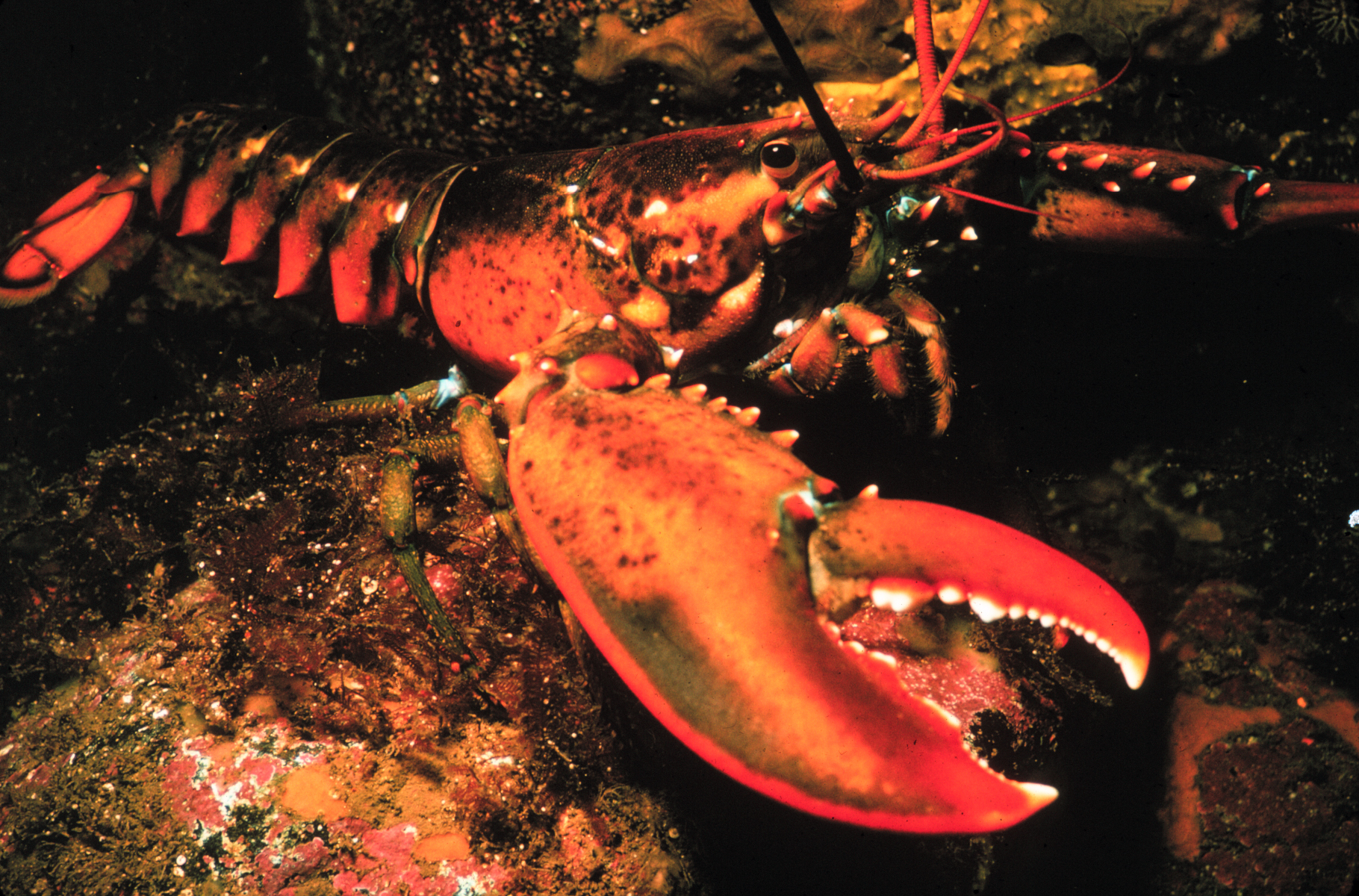
One claw is a heavy crusher, with rounded surfaces for breaking hard shells; the other is a slimmer cutter or pincer claw with sharper edges for grabbing and tearing prey.

Young lobsters begin with similar claws. As they develop, one claw becomes the crusher and the other the cutter. Which side becomes the crusher is influenced by early activity and use.

Lobsters are mostly nocturnal, spending much of the day in shelters among rocks and emerging to hunt crabs, molluscs, fish, and other prey.

03

Rules that keep it working

The lobster fishery is managed using a combination of minimum legal sizes, fishing seasons, trap limits, escape vents, and protections for reproductive females. Exact rules vary between Lobster Fishing Areas.

Egg-bearing females must be released, and in some fishing areas V-notching helps identify reproductive females that receive additional protection. Traps are fitted with escape mechanisms so undersized lobsters can escape before the trap is hauled.

Fun facts

01

Did you know

Lobster blood is not blue inside the body. It contains the copper-based protein hemocyanin, which carries oxygen and can give the blood a blue colour when oxygenated.

02

Did you know

A lobster's crusher claw can develop on either the left or right side. That's why lobsters are sometimes described as left- or right-handed.

03

Did you know

American lobsters can keep growing throughout their lives. Scientists believe some individuals may live to around 100 years, although determining the age of very large lobsters is difficult.