Station 01 · Foundation

A funnel of rock and water between two provinces.

The Bay of Fundy is a 270-kilometre inlet of the Atlantic Ocean, tucked between the coasts of New Brunswick and Nova Scotia. Its extreme shape and depth produce the largest tides on Earth — a natural phenomenon watched, studied, and celebrated for centuries.

Location

Fundy separates New Brunswick from Nova Scotia and reaches west toward Maine. It splits at its head into two arms — Chignecto Bay and the Minas Basin — where the tides climb highest.

The nearest major hubs are Saint John, NB and Halifax, NS. Both make comfortable bases for a Fundy road trip.

Formation

The bay sits in a rift valley formed roughly 200 million years ago as North America and Africa began to pull apart. That deep, funnel-shaped basin is the reason the tide swings so far. Water pushed in by the open Atlantic has nowhere to go but up.

Why it's famous

It holds the world record for the highest tides ever measured — 16.3 metres at Burntcoat Head, Nova Scotia. On top of that, it's a global hotspot for whale watching, seabirds, and one of the most important fossil records ever found.

History

Layers of human story.

The Mi'kmaq and Wolastoqiyik (Maliseet) have lived along these shores for thousands of years, reading the tides to fish, gather, and travel by canoe. Their place names still map the coast.

In 1605, French explorers led by Pierre Dugua and Samuel de Champlain established Port-Royal — one of the earliest European settlements in what is now Canada. Later, Acadian communities built dyked farmland along the marshes at the head of the bay, a landscape still visible today.

Shipbuilding boomed in the nineteenth century, and small ports like Saint Martins and Advocate Harbour still show that maritime heritage in their architecture and museums.

UNESCO Recognition

Two designations of global importance.

  • Joggins Fossil Cliffs (Nova Scotia) — inscribed as a UNESCO World Heritage Site in 2008 for its outstanding record of the Carboniferous “Coal Age.”
  • Fundy Biosphere Region (New Brunswick) — designated by UNESCO in 2007 as a Biosphere Reserve within UNESCO’s World Network of Biosphere Reserves, recognizing the exceptional ecological, cultural, and community values of the upper Bay of Fundy.
  • Cliffs of Fundy UNESCO Global Geopark (Nova Scotia) — designated a UNESCO Global Geopark in 2020, spanning approximately 165 kilometres along Nova Scotia’s Fundy shore.

Field photos

Then and now.

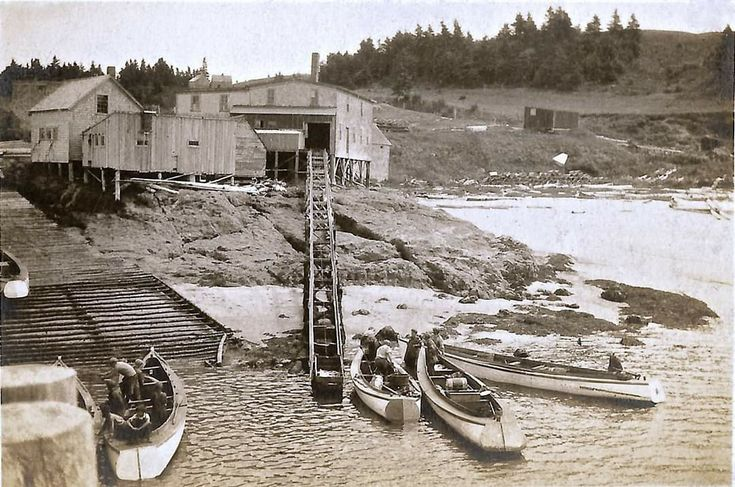
Sepia-toned historic photograph of a wooden fishing wharf and cannery on the Bay of Fundy, with dories tied up at low tide and forested hills behind
A Fundy fishing wharf in the early twentieth century — dories at low tide beside a shoreside cannery.
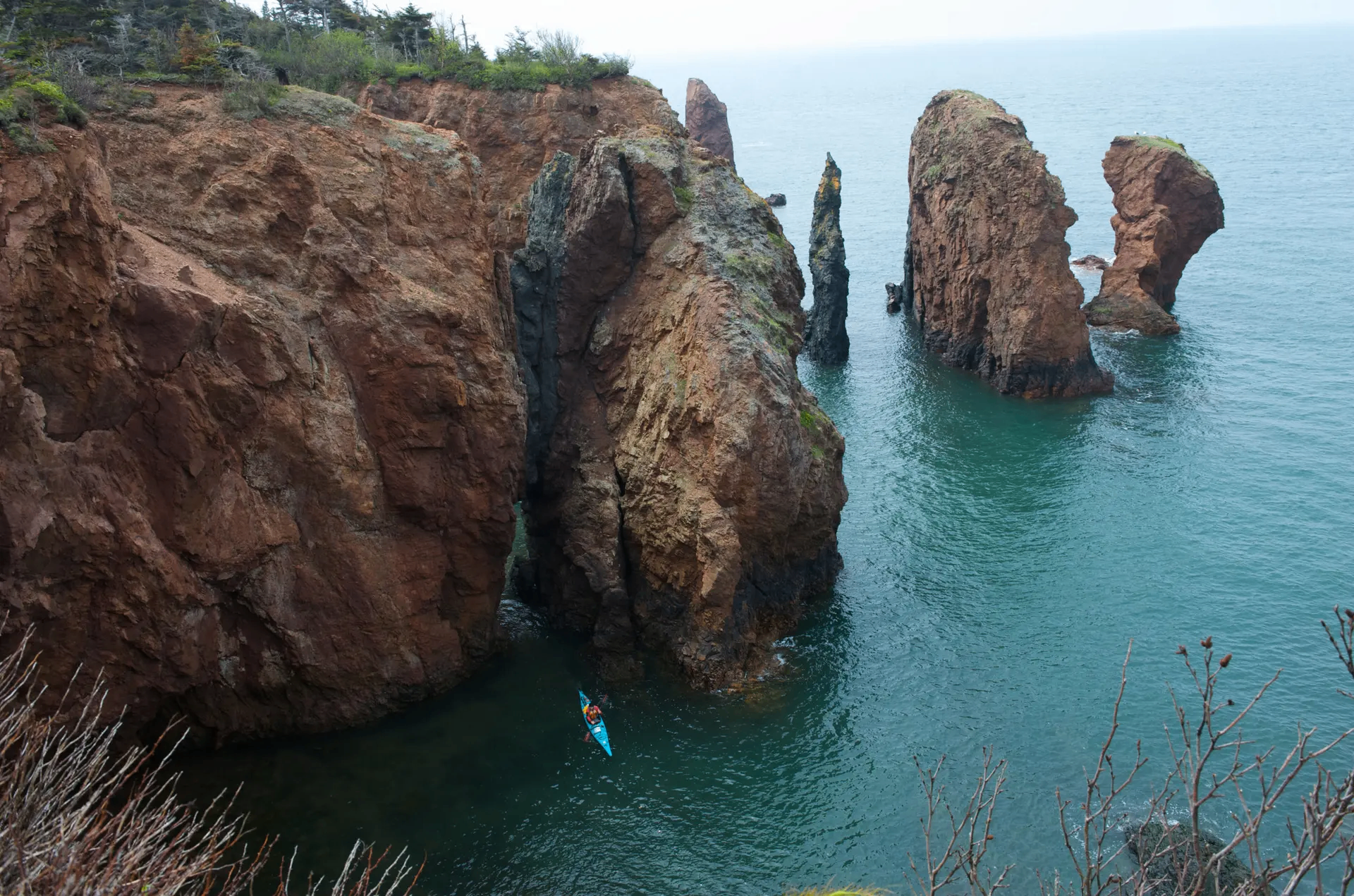
Aerial view of a sea kayaker paddling below towering red sandstone sea stacks and cliffs on the Bay of Fundy
A sea kayaker dwarfed by the red sandstone sea stacks that define the Fundy coast today.